


Normandy & the D-Day beaches
Good morning and welcome to the Paris city tour. After having breakfast together, Mick and Ron set off for downtown Paris at 9:30 a.m. Finding the right train, the right station and platform was their first adventure, which they both thoroughly enjoyed. Diving into the world of Parisian public transportation is a great experience. The tour started with the “usual” attractions, like Notre-Dame and the Louvre, but took a different turn after a second coffee and croissant. Since Mick had been to Paris before, he wanted to stray from the typical tourist paths this time. The artists’ quarter of Montmartre and music stores were on his wish list. So, a change of plans. The walk to Montmartre took us through typical Parisian neighborhoods with countless cafés, shops, and street vendors. It’s easy to imagine living there and enjoying life. Once again, we felt like we were immersing ourselves in everyday Parisian life. In the Pigalle area, we then spent some time strolling down Rue de Douai. Countless music shops—both small and large—selling all kinds of instruments were the highlight of the day for both of us (amateur) musicians. A Crêperie on the same street invited us to have lunch, look around, chat, and linger. The way back through the RER-METRO-PARIS-JUNGLE was easier but just as interesting and impressive. We arrived right on time for the joint briefing and the first meeting of the entire group.
Today began with beautiful weather, despite the forecast predicting rain—perfect conditions for a relaxed first day. After passing through the interesting town of Versailles, we made our first photo stop at the château in Dampierre. After a short break, we continued to Chartres for our first highlight and coffee stop. Following our coffee break and a visit to the very impressive Chartres Cathedral, we set off for the Château de Chambord. Our small photo stop in the morning served as a gentle introduction, allowing us to gradually get used to the scenery of France’s magnificent châteaux. After stopping for lunch right next to the entrance, the Château de Chambord was, of course, the largest château we would visit, together with its vast grounds and park. Its impressive size also promised a fascinating exhibition inside, as well as an authentic insight into life during that period. After a rather long but very interesting tour, our first day slowly came to an end. We made our way to the hotel, which was located practically right next to the château. We rounded off the long day with some very interesting conversations and a bottle of fine wine. You could not ask for a better first day on the road.
Our day naturally began with beautiful weather, ideal temperatures and a truly scenic route. In the morning, we set off directly towards Le Mans, following wonderfully idyllic roads through magnificent château-filled landscapes along the Loire. Our first stop took us to a small but fascinating château in Azay-le-Rideau. We had initially planned to stop only for a photo, but ended up staying for a coffee in this truly small yet charming town. After our stop, we continued on our “château tour.” At Villandry, we stopped to visit the fascinating château, which features an impressive collection of art and beautifully maintained, lush gardens. Naturally, we wanted to stay a little longer, so we spontaneously decided to have lunch right by the château before setting off for the final stretch to Le Mans, feeling refreshed and ready to continue. A few kilometres further on, the scenery gradually changed into a more urban environment, and before we knew it, we had arrived at the Le Mans racing circuit. Our tour naturally included a visit to the newly completed 24 Hours of Le Mans Museum, which was truly original, fascinating and very large. After the many cylinders and engines we had seen during the tour had set all our hearts racing, it was gradually time for the final ride to the hotel. To everyone’s surprise, Martin was already waiting for us there with a bock beer—the perfect ending to a fantastic second day.
Today, our route took us along another classic northern French road to Sablé-sur-Sarthe, where we stopped for a quick coffee. After our stop, we continued to Angers, a city known for its fortress and cathedral. After visiting the fortress of Angers and taking an interesting tour of the grounds, which are also home to the famous and remarkably large Apocalypse Tapestry, we headed into the town centre to visit the cathedral. We then stopped for lunch at a typically French restaurant directly opposite before continuing to our destination, Nantes. Later, the whole group headed into the city’s lively and historic centre. A walk along the Loire, a visit to the cathedral and a tour of the château were, of course, essential parts of the afternoon. In the evening, we enjoyed a well-deserved dinner at a special restaurant run by a chef who had previously worked with Gordon Ramsay. The food and service were outstanding and rounded off the day perfectly.
From modern history to ancient history: this marked the beginning of our transition from a tour filled with châteaux and fortresses to an earlier, more tragic—but nevertheless fascinating—historical era. Our first highlight of the day was the submarine bunker and harbour in Saint-Nazaire. This enormous and highly impressive structure, which provided shelter for German U-boats during the Second World War, is still standing today and has become a very popular tourist attraction. In addition to the bunker, visitors can also explore a large French submarine from the inside as part of a guided tour. After our excursion, we continued on to … a picnic! Martin was already waiting for us just a few minutes from the museum, at a stunning location and, of course, with a selection of delicious local specialities. After a relaxing break by the lake, we continued along the Breton coast following a long day on the road, making our way to the hotel in Carnac. Our hotel was truly lovely, as it was located just a two-minute walk from the beach. Naturally, we had to make the most of the beautiful weather, so we headed straight to the beach. In the evening, we enjoyed an aperitif provided by the hotel, followed by a truly special dinner featuring local seafood from the Atlantic.
Resting is optional and the weather was promising - so a few of us headed out to explore the surroundings of Carnac. Starting with some light overcast, we rode down the Quiberon peninsula on what unfortunately was the only and therefore quite busy road towards the southern tip. After a brief stop near Plague du Conguel, we headed towards the much wilder and less crowded western coast of the peninsula and followed it back north. Back on the mainland, we paid a visit to the stunning old windmill Moulin du Narbon and stopped for some more pictures. From there some backroads led us under blue skies towards our next stop in Auray, where we parked our bikes right next to the famous Pont de Saint Gustan and started exploring the old town around the port by foot. Some lovely french houses were waiting for us, as well as delicious Galette for lunch. After all that history, there was another stop on our way back to the hotel, telling some even more ancient secrets: the largest megalithic complex of its kind in the world - the menhirs and dolmen of Carnac. After this we headed back to the hotel, to get some rest and enjoy a sunny afternoon at our leisure and met with the other for an italian dinner in a local restaurant.
We had all fallen in love with the coast—not only because of the wonderful weather, but also because of the gentle sea breeze and the unique sense of freedom it gave us, in addition to the enjoyment of riding our motorcycles. Today, we followed a truly beautiful route: first through several forests, then along the coast towards Cap Fréhel. Before continuing to the cape, however, we stopped for lunch in the town of Le Val-André. Galettes and cheese provided the perfect meal, leaving us refreshed and ready to continue to the cape. When we arrived at Cap Fréhel, it made a lasting impression on everyone—not only because of its lighthouse, but also because of its spectacular scenery. A few kilometres from the cape, we reached our destination, Saint-Malo—an idyllic coastal town with a long beach, a spacious promenade and a completely walled old town.
Today was a very special day. Our early start at 8 a.m. was necessary because of the day’s highlight: Mont-Saint-Michel. Every minute we saved proved worthwhile. After arriving on the island, we were able to explore the area at our leisure, with pleasant temperatures of around 20°C, sunshine, a gentle breeze and very few tourists. Step by step, we made our way up the many stairs towards the church, taking our time to admire the architectural wonder perched on the rock. By midday, we had finished our visit—just in time for the crowds of tourists to arrive and the temperatures to start rising. Afterwards, we stopped at a rest area just 500 metres from our car park, where Martin was waiting for us with a picnic. The lovingly prepared delicacies tasted even better with the magnificent view of Mont-Saint-Michel. We then set off towards Bayeux. Along the way, we passed the historic bridge in Saint-Fromond, where we stopped briefly for a photo. After arriving in Bayeux, the whole group immediately set off to explore the beautiful little old town. In the evening, the group gathered for dinner at the hotel. Afterwards, Martin treated us to a piano concert.
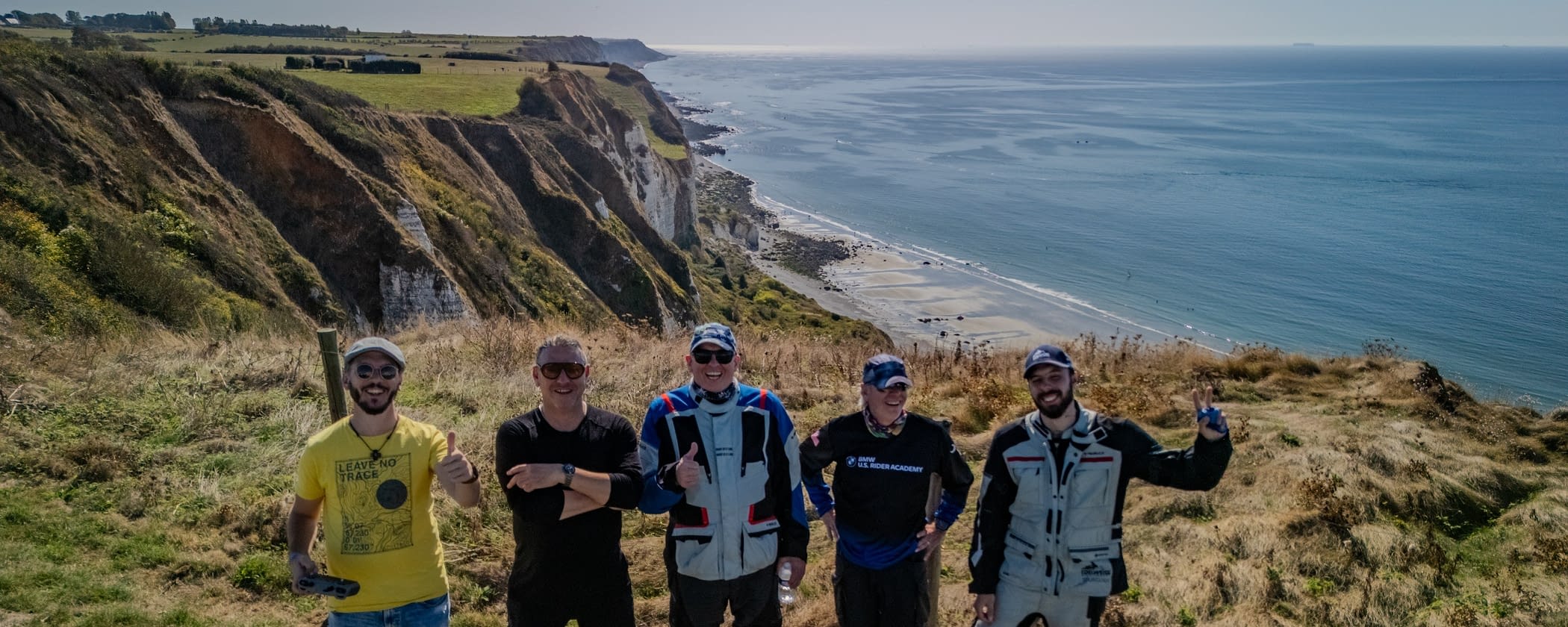
Our day of rest started off relaxed. Breakfast at 9 instead of 7, and afterwards we headed towards the D-Day beaches in the van with a total of 3 passengers. Our first stop took us to the famous parachutist on the church in Sainte-Mère-Église. After a short walk around the town, we continued on to Utah Beach, right at the beginning of the landings. The first landing site was still relatively untouched by the “corresponding” landscape, although we already passed several monuments and museums along the way. The weather gradually cleared up, making way for blue skies. Our next stop on the way to Omaha Beach was Pointe du Hoc, the well-known bombed area with its bunker complex right on the cliffs overlooking the Atlantic. The weather had developed perfectly for us, as Martin was even able to take some great drone shots of the surrounding area. The next step was finally heading to Omaha Beach. Hungry after the long tour, we spontaneously stopped for a picnic and then drove to the large monument directly on the beach. A few minutes’ drive from the monument, we made a truly worthwhile stop at the American soldiers’ cemetery. At the Overlord Museum nearby, we were able to get an interesting overview of the operation and the historical equipment used in the war. After a long day, we met up again in town for dinner at the burger restaurant and had a great time afterwards karaoke and Martin on the piano!
Our day today once again started with good weather, but was quite short overall—rightly so.. We started by heading to our first stop at Pegasus Bridge. A particularly historically significant place for the French. Directly in front of the crossing of the former bridge, which is now in a museum, we took a break at a café. Just a few minutes away, we looked at the famous bridge. Unfortunately, the museum was closed, but the bridge could be seen from the outside, so everyone still got their photo. After a rather winding drive, we took a lunch break in the harbor town of Honfleur. Here, we had a great view of the harbor and a restaurant that was very famous for its fish dishes. Our coffee stop along the way was right on the coast, at a former oil refinery—interesting, but also very beautiful at the same time. The last few kilometers were easy for us, as this time we arrived in Etritat a little earlier than usual. It was worth it. Etritat is a beautiful place, located directly on the coast—just like our hotel. We now had enough time to explore and enjoy the town. The perfect conclusion to a tour!
Our last driving day started out misty, almost as if the weather was sad that the tour was coming to an end. The journey to Jumiges was accompanied by heavy clouds and only 2 minutes of rain. The roads took us through small towns and then to a ferry crossing to Jumiges. At the ruins of the cathedral in Jumiges, the weather gradually became more stable, and we were able to take some great photos of the historic structure. After another ferry crossing back onto our route, we drove into increasingly better weather. Shortly before Giverny, we stopped for a panoramic view of the valley along the Seine. In Giverny, we then stopped for lunch and a subsequent tour through the town of the painter Claude Monet—afterwards, we continued on to Paris. On the last evening, after the farewell dinner, we sat together over a bottle of wine and talked about the most beautiful impressions of the tour. René summed up the tour perfectly: “Every new day trumped the previous one in its beauty.”